Hello everyone, I hope you all are doing well :) I chose to research the country of Peru because I’ve always had an admiration for the culture and half of my family lives in Cusco. It’s been very interesting learning about this country and I’m excited to explain what I have learned this week about Peru’s tectonic plates and boundaries. When I was researching I found out that Peru is on a convergent plate boundary. Looking back at this week’s lesson, I was able to understand that convergent means that Peru’s plates are “toward one another.” The countries of Peru and Chile have created a trench called the Nazca Plate (according to The Geological Society). It follows along the border of Peru and Chile and is also part of the Ring of Fire.The Nazca Plate is an oceanic plate that shares convergent and divergent boundaries which force underneath the South American plate at a rate of “4 cm a year” (according to The Guardian). Peru also contains the Altiplano plate which due to the ...
My sophomore year of high school my family decided to take a trip to Peru in order to visit family. Most of my dad’s side of the family lives in Cusco, Peru. While I was doing my research on recent floods in Peru I was devastated to learn that there was flooding due to heavy rainfall last April in Cusco. On the 19th of April, The National Meteorology and Hydrology Service of Peru sent out a report that 68mm of rain had fallen in the last 24 hours. There was an overflow in the Santa Fe and Otari rivers and one house was completely destroyed. Around 100 people were affected and landslides ended up affecting the roads. A month prior, on March 13, 2021 in Piura located 534 miles north of Lima, citizens were desperately trying to cross a river to escape the horrible flooding. Back in 2017, around half the country of Peru was under a state of emergency and more than 250,000 children were affected due to the abnormal warming of Pacific waters resulting in El Niño. Around 380 health...
Hello everyone! I can’t believe this is the last blog post of the semester. I truly enjoyed learning about the country of Peru and I’m excited to summarize to you what I learned. Peru is known to be a seismic country and has a history of consequential earthquakes. The main natural hazard in Peru are the ongoing earthquakes that hit along the Andes mountains towards the coast. Due to Peru lying on top of the Ring of Fire and the Nazca Plate, earthquakes can commonly hit the country with a magnitude of over 8.0 and cause destructive damage. Earthquakes in Peru are a priority to address because in the country’s past, powerful earthquakes have covered and swept away mountain towns. I remember learning earlier this year about how the entire town of Yungay got covered due to a massive landslide reaction after an earthquake in 1970. One of the recommendations I would address in order to avoid the hazardous earthquakes is to have a plan correlated with your family just in case one hits un...


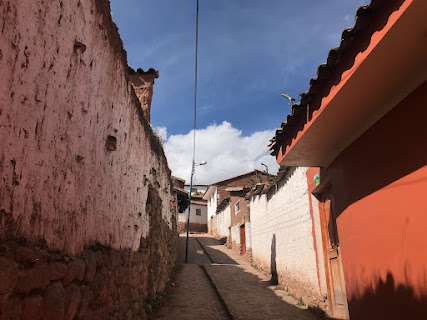
Peru, welcome to Geol9!
ReplyDelete